Sales@cmcmat.com
Your global source for certified aircraft brake carbon heat stacks and steel heat sinks. Supporting major Boeing, Airbus, and regional jet platforms with ready-to-ship inventory.
At CMCMAT, we provide cutting-edge thermal management solutions for the global aviation industry. As a leading manufacturer of carbon-carbon (C/C) composites, our aircraft brake heat sinks are engineered to withstand extreme temperatures and provide reliable stopping power for commercial, military, and private aircraft.
Superior Thermal Stability: Our C/C composite brake discs maintain excellent mechanical properties and friction coefficients even at temperatures exceeding 1,000°C.
Lightweight Advantage: Carbon-carbon materials are significantly lighter than traditional steel brakes, improving fuel efficiency and increasing aircraft payload capacity.
Extended Service Life: Designed for high wear resistance, our heat sinks offer more landings per overhaul (LPO), reducing maintenance costs for fleet operators.
Rapid Heat Dissipation: Optimized carbon fiber architecture ensures fast cooling, preventing brake fade during rejected take-offs (RTO) or high-frequency landings.
We offer a comprehensive selection of aircraft braking solutions tailored to diverse technical requirements:
Carbon-Carbon (C/C) Brake Discs: The gold standard for modern jet aircraft, featuring high energy absorption and low density.
Steel Brake Heat Sink Components: Reliable solutions for classic aircraft models and specific military applications.
Integrated Brake Assembly Parts: Including pressure plates, rotors, and stators, precision-machined to meet strict aviation standards.
Our aircraft brake components are compatible with major aircraft platforms, providing essential safety and performance for:
Commercial Airliners (Narrow-body and Wide-body)
Military Fighter Jets and Transports
Business and Private Aviation
Contact our engineering team for customized aircraft braking specifications and wholesale inquiries.
Showing 1–16 of 42 results

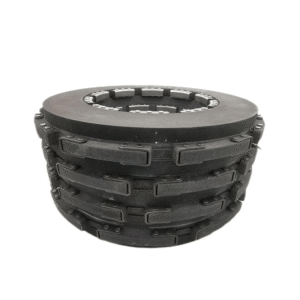
| # | Product Name | Aircraft Type | Part No. |
|---|---|---|---|
| 1 | Heat Sink | A318/A319/A320 | GA31984, GA31984R1, GA32205, GA32205R1, GA32713, GA32713R1 |
| 2 | Heat Sink | A318/A319/A320 | 537-68, 537-67 |
| 3 | Heat Sink | A318/A319/A320 | 537-106, 537-106-1, 537-106-2 |
| 4 | Heat Sink | A321 | GA32313-1, GA32313-2, GA32313-3, GA32313-4 |
| 5 | Heat Sink | A330-200/300 A340-200/300 | 537-34-1, 537-34-2, 537-173-1, 537-173-2, 537-173-3, 537-173-4 |
| 6 | Heat Sink | A330-200/300 A340-200/300 | 537-122-1, 537-122-2, 537-122-3, 537-122-4 |
| 7 | Heat Sink | B737-800/900/BBJ B737-8 | GA32003, GA32498, GA32498R1 |
| 8 | Heat Sink | B737-800/900/BBJ B737-8 | 537-206-1, 537-206-2, 537-206-3, 537-206-4 |
| 9 | Heat Sink | B747-400/400F | 537-3/4, 537-96/97 |
| 10 | Heat Sink | B747-400/400F | 537-113, 537-114 |
| 11 | Heat Sink | B757-200 | 304-330 |
| 12 | Heat Sink | B767-300 | GA32498 |
| 13 | Heat Sink | BAe146 | AH091373 |
| 14 | Heat Sink | Dash 8 | 2-1517, 2-1517-1 |
| 15 | Heat Sink | ERJ-135/140/145 | 537-125 OPT1, 537-125 OPT2, 537-125 OPT3, 537-125 OPT4, 537-125-1 OPT1, 537-125-1 OPT2, 537-125-1 OPT3, 537-125-1 OPT4 |
| 16 | Heat Sink | ERJ-135/140/145 | 537-52 OPT1, 537-52 OPT2, 537-52 OPT3, 537-52 OPT4 |
| 17 | Heat Sink | ERJ-135/140/145 | 537-124 OPT1, 537-124 OPT2, 537-124 OPT3, 537-124 OPT4, 537-124-1 OPT1, 537-124-1 OPT2, 537-124-1 OPT3, 537-124-1 OPT4 |
| 18 | Heat Sink | ERJ-190/195 | 90010400, 90009483-1 |
| 19 | Heat Sink | Fokker 100 | 5013427,5013427-1, 5011828 5011828-1, 5012031, 5012031-1, 5013504, 5013504-2, 5013504-3 |
| 22 | Heat Sink | MD-90 | 5011460-3 |
| 24 | Heat Sink | ATR72 | AH089676 |
| 25 | Heat Sink | ATR72 | GA32469 |
| 26 | Heat Sink | ARJ21/ C909 | 90008516 |
Can’t find your specific part number? We provide custom carbon-carbon brake solutions for various aircraft platforms.
| Technical Property | Typical Value |
|---|---|
| Material Type | Carbon-Carbon (C/C) Composite |
| Density | 1.72 - 1.80 g/cm³ |
| Specific Heat | 1000 - 1400 J/(kg·K) |
| Max Service Temp | Up to 1500°C |
| Friction Coefficient | 0.35 - 0.45 (Stable) |
Custom specifications are available upon request to meet specific aircraft platform requirements

A: Carbon-Carbon composites offer two main advantages: weight reduction and thermal stability. C/C brakes are approximately 60% lighter than steel equivalents, which translates to significant fuel savings and increased payload. Furthermore, while steel's friction performance decreases as it gets hotter, C/C composites actually maintain or even improve their friction coefficient at high temperatures, ensuring safer landings.
A: The service life (Landings Per Overhaul) depends on the aircraft type and operating conditions. However, our advanced carbon fiber architecture is engineered for high durability, typically offering 1,500 to 2,000+ landings under standard commercial operating procedures, which significantly reduces the frequency of maintenance cycles compared to traditional materials.
A: Yes. CMCMAT specializes in the customized manufacture of aircraft brake components. We can produce rotors, stators, and pressure plates based on specific OEM drawings or performance requirements. Our precision CNC machining ensures that all tolerances meet the rigorous safety standards of the aviation industry.
A: Our aircraft brake heat sinks feature high thermal conductivity and optimized heat capacity. This allows for rapid heat dissipation during high-energy braking events, such as rejected take-offs (RTO). The superior thermal management prevents heat transfer to the landing gear and tires, enhancing overall aircraft safety.
A: At CMCMAT, we adhere to strict aerospace quality management systems. Our production processes for C/C composites and aircraft brake assemblies are strictly controlled to ensure consistent density, friction performance, and structural integrity, meeting the demanding reliability required for both civil and defense aviation.
Expert engineering support for high-performance brake solutions.
Note: Your email information will be kept strictly confidential.