Sales@cmcmat.com
Custom 3D Braided & Needled Structures for Aerospace, Defense, and Industrial Applications
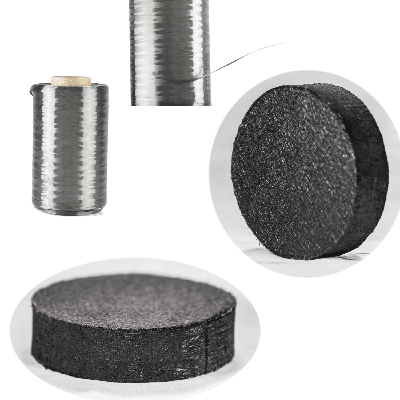
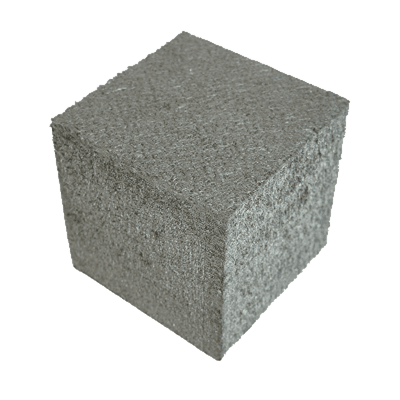
At cmcmat.com, we specialize in supplying high-quality carbon fiber preforms, providing the essential structural foundation for next-generation composite materials. Our preforms are meticulously crafted using advanced textile techniques such as 3D braiding and needle punching to ensure superior mechanical properties and thermal stability under extreme conditions.
Whether you are developing carbon-carbon composite heat stacks for commercial aviation or high-density nozzle components for aerospace propulsion, our tailored fiber placement ensures optimal performance. We work with premium PAN-based fibers, offering custom fiber volume fractions and densities to meet your precise engineering specifications.
The performance of a composite is defined by its reinforcement structure. We utilize state-of-the-art textile technologies to ensure structural integrity and thermal stability:
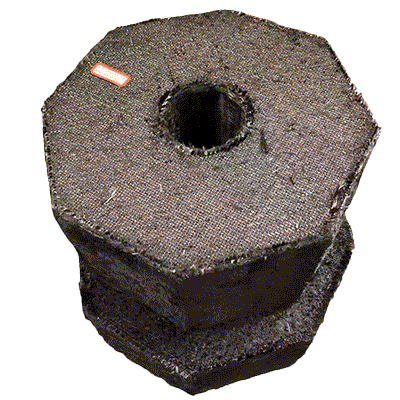
3D Braided Preforms: Designed for multi-directional strength, our 3D braiding technology eliminates interlaminar weak points, making them ideal for high-pressure components like rocket motor nozzles and missile throat inserts.
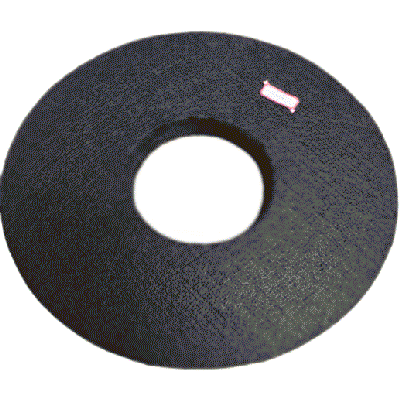
Needle-Punched (Needled) Preforms: By vertically integrating carbon fiber layers through precision needling, we create isotropic reinforcements perfect for heavy-duty aircraft brake discs and thermal insulation hardware.
Multi-Axial & Tailored Fiber Placement: We offer customized fiber orientations (0°/90°/±45°) to optimize the mechanical properties based on your specific stress-load requirements.
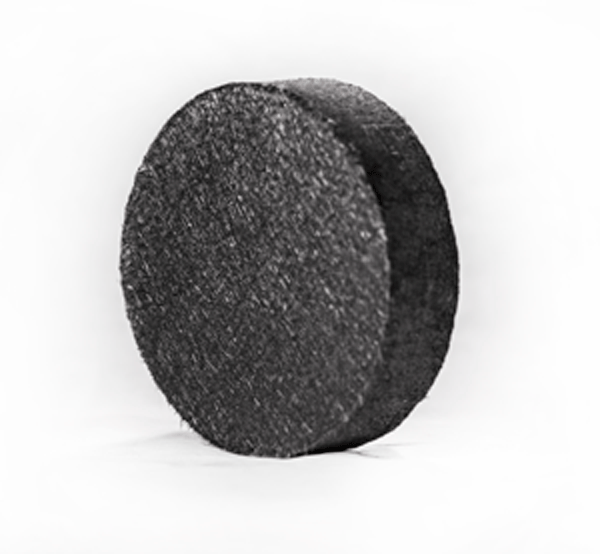
Technical Focus: Interlaminar Bond Strength & Friction Stability.
Description: This process involves mechanically entangling multiple layers of carbon fiber webs or fabrics using specialized felting needles. The vertical fiber orientation creates exceptional interlaminar shear strength and uniform heat dissipation, which are critical for friction applications.
Primary Applications: Aircraft carbon-carbon brake discs, car carbon-ceramic brake rotors, and industrial thermal insulation.
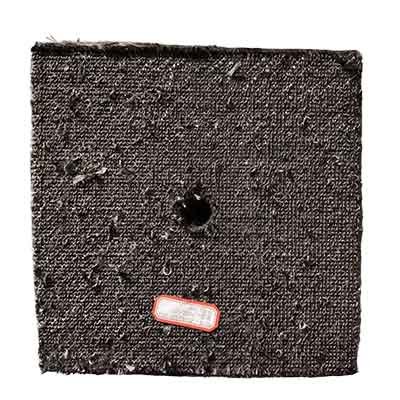
Technical Focus: Structural Integrity & Multi-directional Strength.
Description: Utilizing a fully integrated three-dimensional interlacing technique, these preforms eliminate traditional delamination risks. The fibers are intertwined in X, Y, and Z axes to provide superior ablation resistance and structural stability under extreme thermal loads.
Primary Applications: Rocket motor nozzles, missile throat inserts, and high-pressure aerospace components.

Technical Focus: Directional Mechanical Optimization.
Description: These preforms are engineered by placing carbon fibers in specific orientations (e.g., 0°, 90°, ±45°) according to the load-bearing requirements of the final part. This allows for high design flexibility and optimized stiffness-to-weight ratios for specialized structural parts.
Primary Applications: Structural aerospace components, racing car parts, and high-performance military vehicle reinforcements.
Our carbon fiber preforms are the backbone of industries where failure is not an option. By choosing our preforms, you are investing in reliability for:
Aviation Braking Systems: The essential substrate for aircraft brake carbon-carbon heat stacks and steel brake components, ensuring high heat capacity and stable friction coefficients.
Aerospace Propulsion: Providing the high-temperature resistance required for rocket nozzles, throat liners, and nose cones.
High-End Automotive: Serving as the structural base for carbon ceramic brake rotors used in supercars and military armored vehicles.
Industrial Thermal Management: Used in vacuum furnaces and high-temperature structural parts where low thermal expansion is critical.
A: Carbon fiber preforms are the three-dimensional, dry fiber skeletal structures that serve as the reinforcement base for composite materials. They are critical because the fiber orientation and weaving architecture (such as 3D braiding or needling) determine the final mechanical strength, thermal conductivity, and structural integrity of the C/C or C/SiC composite parts.
A: 3D braided preforms feature an integrated, multi-directional fiber structure that eliminates weak interlaminar layers, making them ideal for high-stress aerospace components like rocket nozzles. Needle-punched preforms are created by vertically entangling fiber layers, providing excellent through-thickness properties and cost-efficiency for large-scale applications like aircraft brake discs and carbon ceramic rotors.
A: We primarily use high-strength PAN-based (Polyacrylonitrile) carbon fibers, including industry-standard grades like T700 and T800. For specific high-temperature or high-modulus requirements, we can customize the fiber selection to match your project’s thermal and structural specifications.
A: Yes, we specialize in Near-Net Shape (NNS) manufacturing. This means we can weave or needle preforms into complex geometries—such as hollow cylinders, cones, or varying-thickness disks—to minimize material waste and reduce the machining time required for the final composite part.
A: Lead times vary depending on the complexity of the architecture and the volume of the order. Generally, standard samples can be produced within 2-4 weeks, while mass production for complex 3D braided structures may take 6-10 weeks. Please contact our technical team for a detailed timeline based on your CAD designs.
A: Absolutely. Our manufacturing processes are governed by strict quality management systems (similar to ISO 9001/AS9100). Every batch of carbon fiber preforms undergoes rigorous inspection for fiber volume fraction, density consistency, and dimensional accuracy to ensure they meet the demands of aviation and defense sectors.
Material Consistency: We use premium PAN-based carbon fibers (T700/T800 grade) to ensure uniform density and chemical purity.
Customization (OEM/ODM): From complex geometric shapes to specific fiber volume fractions, our engineering team works with you to develop bespoke preform solutions.
Quality Assurance: Every preform undergoes rigorous dimensional inspection and density testing to comply with international aerospace and defense standards.
Carbon fiber preforms are used as the foundational structure in the production of carbon fiber-reinforced composites, which are highly sought after in various high-performance applications due to their exceptional strength-to-weight ratio and stiffness. Here’s a breakdown of how carbon fiber preforms are utilized:
Preforms are essentially ready-made pieces of carbon fiber fabric or mats, shaped to fit specific molds or parts. They are made by arranging carbon fiber in a desired three-dimensional shape or architecture, which is then impregnated with a resin matrix to form a composite material through processes like resin transfer molding or compression molding.
Aerospace and Aviation:
Automotive Industry:
Sports and Recreation:
Marine:
Wind Energy:
Construction and Infrastructure:
The versatility and superior properties of carbon fiber preforms make them indispensable in modern engineering and manufacturing, particularly where high strength, reduced weight, and durability are critical.
Note: Your email information will be kept strictly confidential.